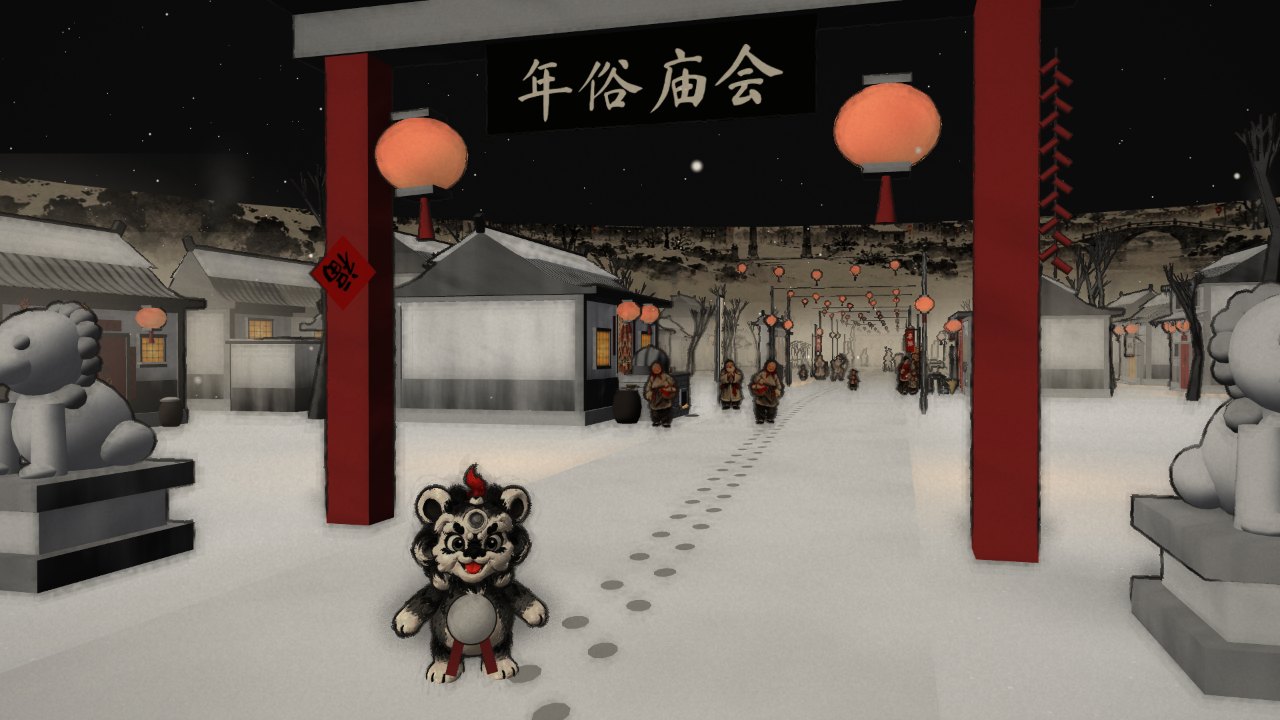
The 5000-Year Metaverse · Tianjin Series
Yuanbao's New Year Temple Fair
From Little New Year to the Lantern Festival
Snow falls in the last lunar month, and the temple fair strikes up its gongs. Ruirui, a little lion who leapt out of the ink painting Auspicious Lion, will take you through a whole Chinese New Year, from beginning to end.
New Year customs aren't old rules — they are a family's hopes for reunion, safety and a good harvest. Each zone tells where one custom comes from, then tests you with a craft challenge.
First read Ruirui's story, Ruirui Leaps out of the Painting →
Scroll down and follow Ruirui into the fair
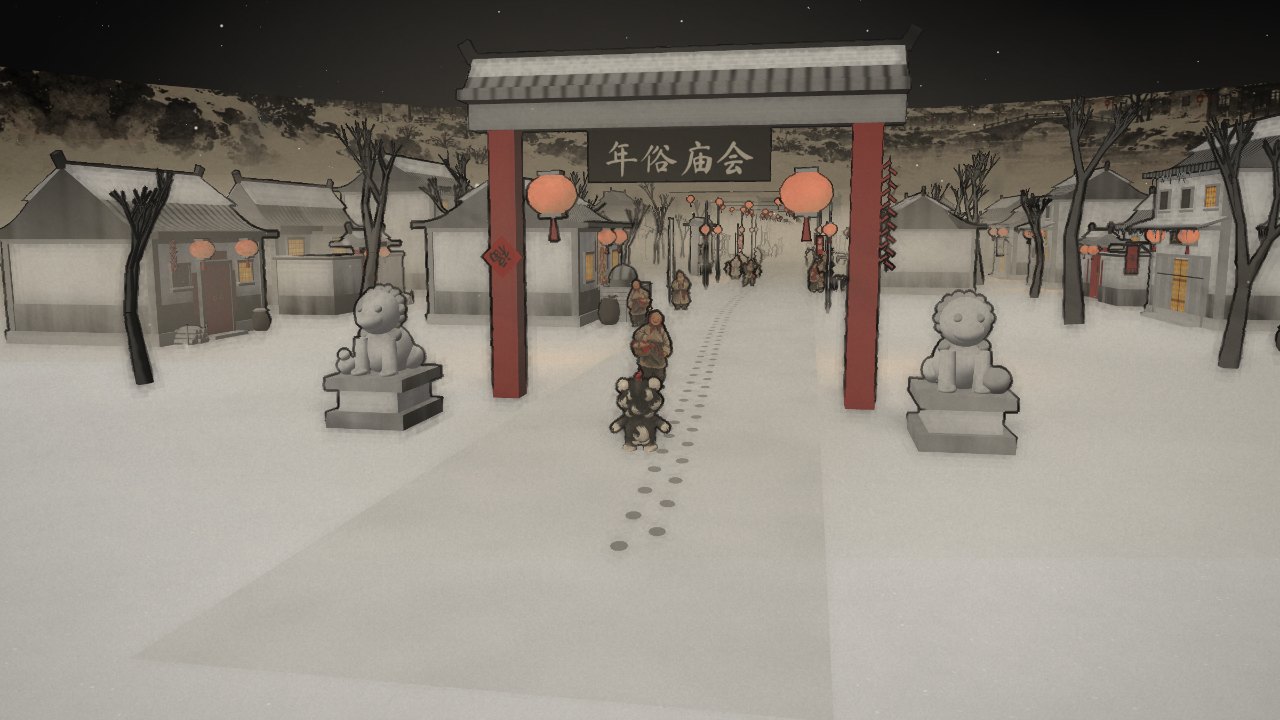
Stop 1 · 23rd of the 12th lunar month
Little New Year · Seeing off the Kitchen God
On the 23rd, the candy sticks
Folk belief holds that the Kitchen God watches over each family's stove all year, and on Little New Year he flies up to heaven to report the household's good and bad deeds to the Jade Emperor. Families offer him sticky, sweet kitchen-god candy (tanggua), hoping he will speak sweetly — "say good things in heaven, bring peace back to earth". In the north, Little New Year falls on the 23rd of the twelfth lunar month; in the south, usually on the 24th.
Did you know?Tanggua is boiled from malt sugar; northerners also call it "Guandong candy". The cold makes it hard and brittle, but once you bite in it sticks to your teeth — which is exactly how it "glues the Kitchen God's mouth shut".
Pass to win the token “Kitchen-God Candy”
Stop 2 · 24th–28th of the 12th month
Sweeping the House · Spring Couplets
New peach charms replace the old
"On the 24th, sweep the house": the big clean-up sweeps out the old to make room for the new (in Chinese, "dust" sounds like "old"). Spring couplets grew out of taofu — peach-wood boards hung on doors to ward off evil. The lines "The new year brings lasting joy; the fine festival is called Eternal Spring", which the Later Shu ruler Meng Chang wrote on a peach board, are often called one of the first spring couplets. There are rules for hanging them: facing the gate, the first line goes on the right and the second on the left; the first line usually ends on a falling (oblique) tone, the second on a level tone.
Did you know?The character 福 (fu, good fortune) is often hung upside down, because "fu is upside down" sounds just like "fortune has arrived". The 福 in the middle of the main gate, though, is traditionally hung upright, to welcome fortune in.
Pass to win the token “Spring Couplet”
Stop 3 · 29th of the 12th month
Paper Window Flowers & New Year Prints
One sheet of red paper, a window full of spring
Cutting paper window flowers and pasting up New Year prints "adds joy" to the new year. Everything in a print carries a message, usually through a pun: a fish means "surplus year after year", the spring ox means "a bumper harvest", a bat means "fortune", a deer means "an official's salary". Yangliuqing in Tianjin, Taohuawu in Suzhou, Yangjiabu in Shandong and Mianzhu in Sichuan are known as China's four great centres of New Year woodblock prints.
Did you know?Chinese paper-cutting was inscribed on UNESCO's Representative List of the Intangible Cultural Heritage of Humanity in 2009, and window flowers are its most familiar form.
Pass to win the token “New Year Print”
Stop 4 · New Year's Eve
New Year's Eve · The Reunion Dinner
Old year meets new, the family together
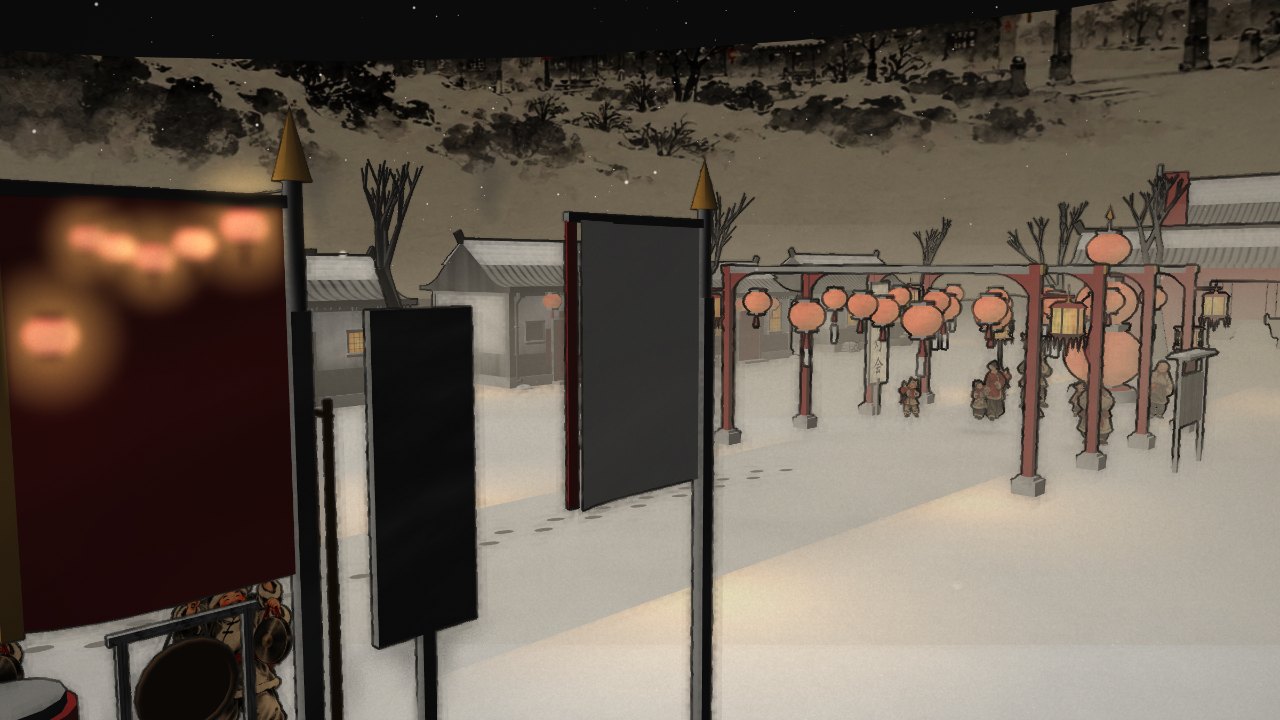
However far away they are, family members hurry home for the reunion dinner on New Year's Eve. In the north people make dumplings (jiaozi), because the word sounds like "the meeting of the years" at midnight, when the old year hands over to the new; dumplings are also shaped like gold ingots, a wish for wealth. Some families hide a copper coin in one dumpling — whoever bites it will have the best luck all year. After dinner everyone stays up to see the new year in, and elders give children "lucky money" in red envelopes to keep evil spirits away.
Did you know?In much of southern China the Eve is not about dumplings but rice cake (niangao, "higher every year") and sweet rice balls (tangyuan, "the whole family together").
Pass to win the token “Dumpling”
Stop 5 · Spring Festival Day
Day One · The Temple Fair
Candied hawthorns and ring toss
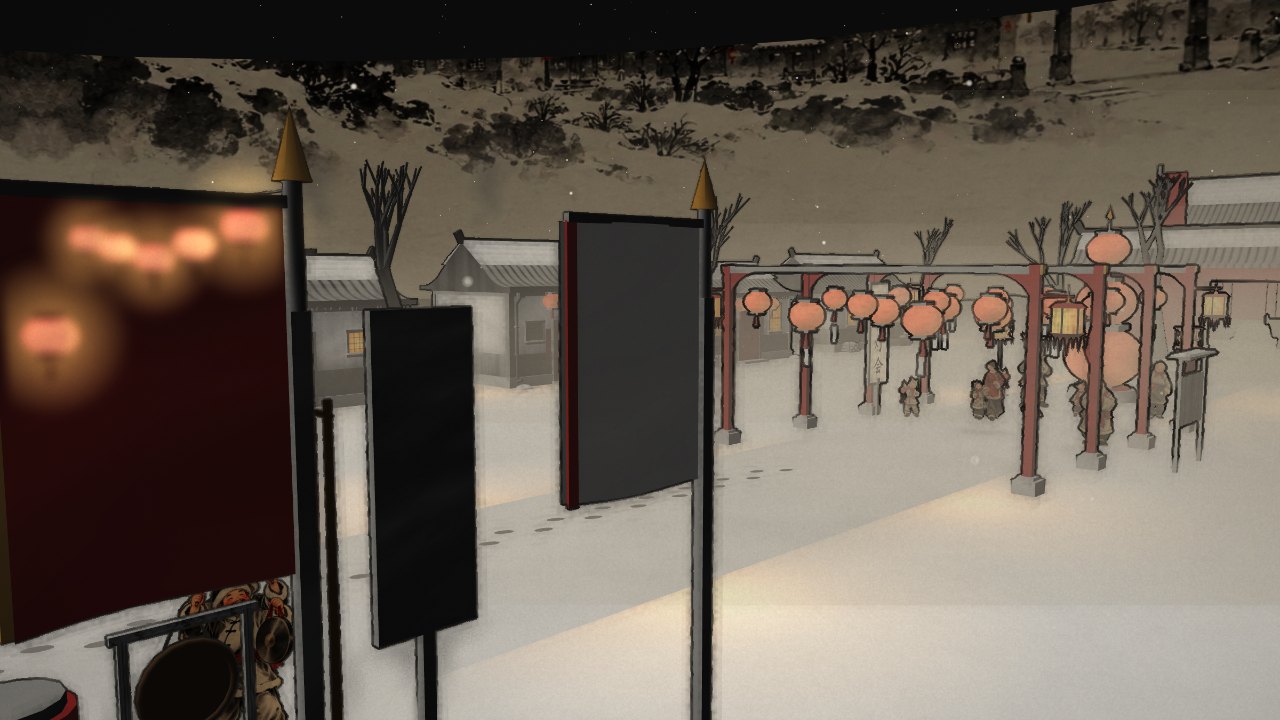
On the first day of the new year people put on new clothes, pay New Year visits, and then head to the temple fair. Temple fairs began as markets held during temple ceremonies and grew into the liveliest place to spend the Spring Festival: candied hawthorn sticks, sugar painting, diabolos, ring toss, ballad singers and acrobats — a whole year's fun in one place.
Did you know?Changdian and Ditan in Beijing, the Ancient Culture Street in Tianjin… every region has its Spring Festival fairs. Candied hawthorns, diabolos and pinwheels are the "three treasures" of an old-style temple fair.
A bonus game: no token, just your best score
Stop 6 · 2nd–14th of the 1st month
Lion Dance · Shehuo Parade
The drums roll, the lion leaps out
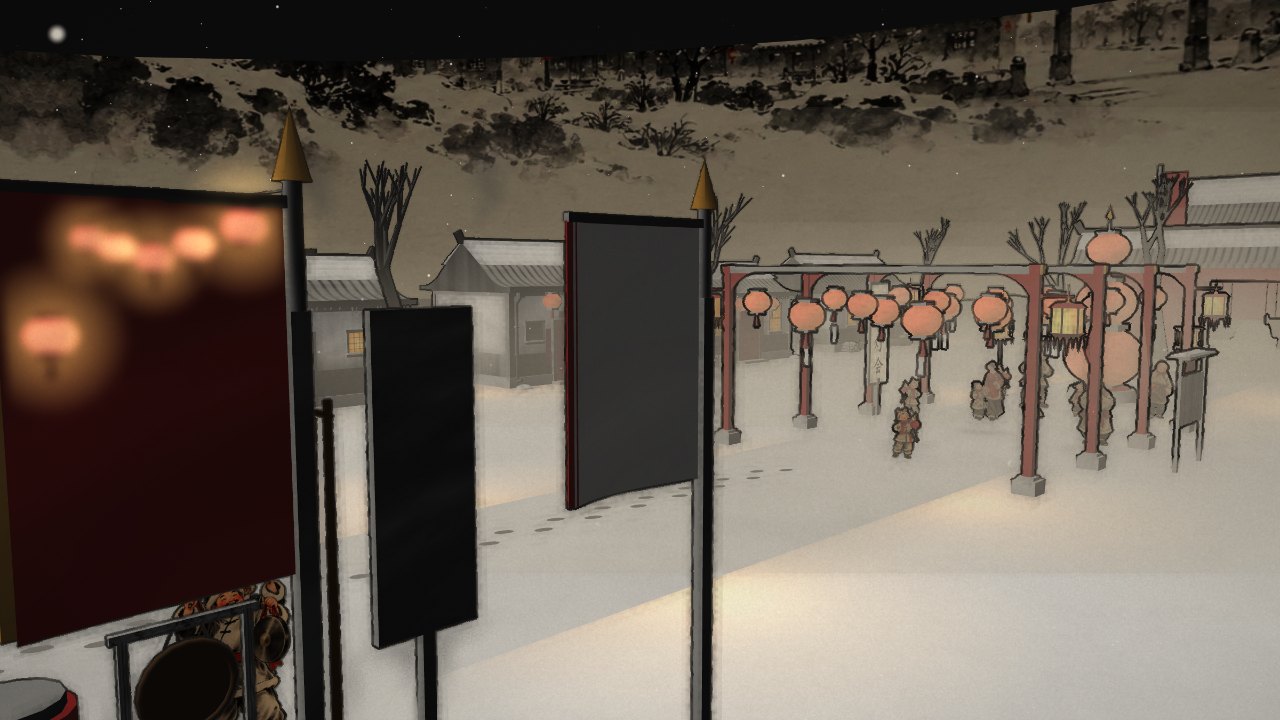
The lion dance is the most joyful show of the Spring Festival: people believe the lion drives away evil and brings in good fortune. Northern lions are chubby and lifelike; southern lions are nimble and fierce, all about spirit. Shehuo parades come from ancient rites honouring the earth and fire — drums, stilt-walkers and "land boats" fill the streets to pray for good weather in the year ahead.
Did you know?Before a new lion first performs, its eyes are "dotted" with cinnabar — only then does the lion come alive. Ruirui's story, too, begins with one dot of cinnabar the painter never added.
Pass to win the token “Lion Head”
Stop 7 · 15th of the 1st month
Lantern Festival · The Lantern Fair
Fiery trees and silver blossoms — a night without darkness
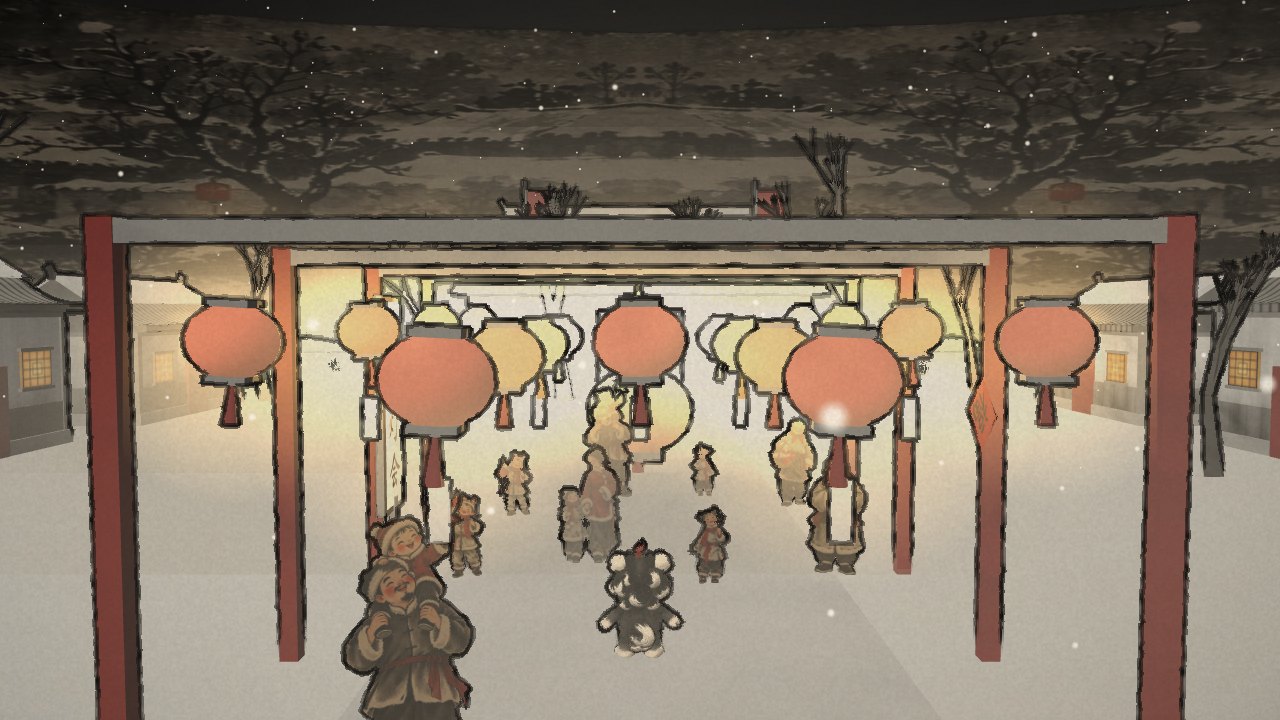
The fifteenth of the first lunar month is the first full-moon night of the new year. Admiring lanterns on this night is said to date back to the Han dynasty, and by the Tang and Song whole cities glowed with light. From the Song dynasty on, people wrote riddles on lanterns for others to guess — lantern riddles. Eating sweet rice balls, admiring lanterns, guessing riddles, strolling to "walk off illness": only after this day is the new year truly over.
Did you know?In Tang-dynasty Chang'an the night curfew was lifted for three nights around the Lantern Festival, so the whole city could stay out admiring lanterns until dawn.
Pass to win the token “Festive Lantern”
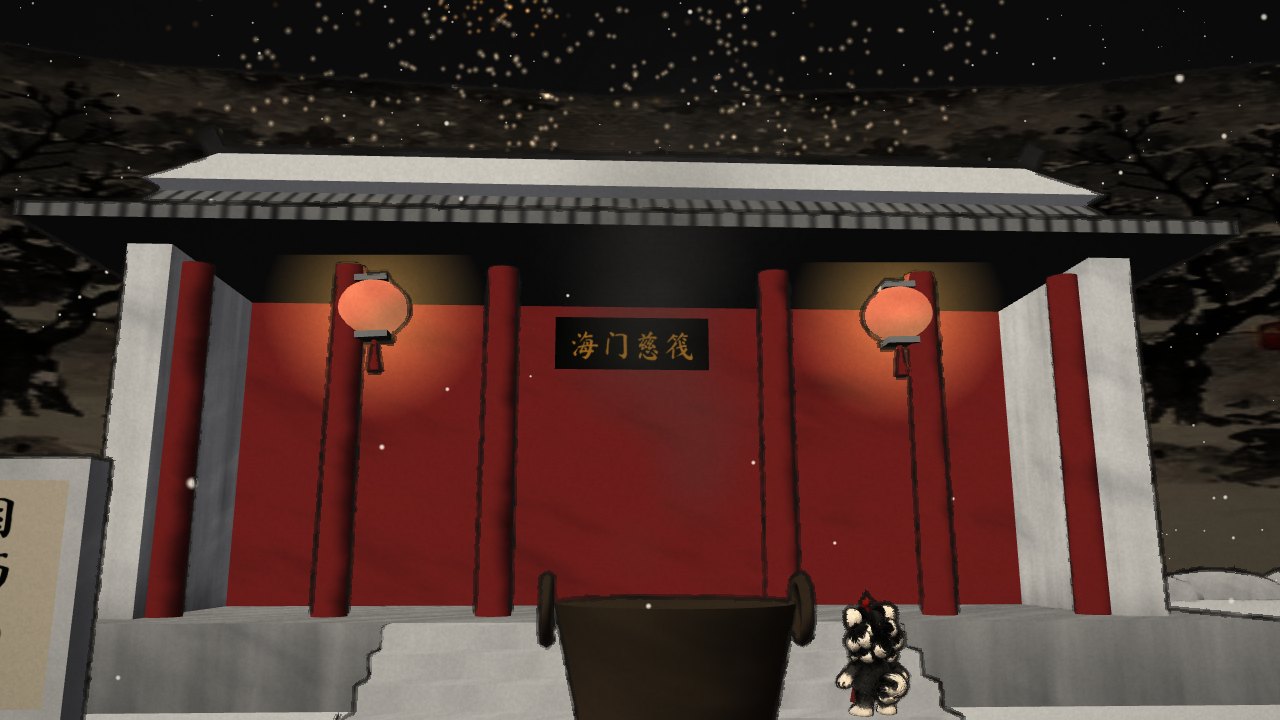
Finale · The Mazu Temple
Keep the New Year spirit alive
At the far end of the lantern fair stands the Mazu Temple (Tianhou Gong). A temple fair was first a market that grew up around a temple: worshippers gathered for the rites, and traders followed. The temple honours Mazu, goddess of the sea, and old Tianjin folk like to say “first came Mazu's temple, then came the city of Tianjin”. Light a stick of incense before the hall, and your New Year is complete.
Legend has it that the one dot of cinnabar the painter never gave Ruirui was finally added in the lantern light of the Lantern Festival. Customs are like that, too: year after year, family after family, as long as someone remembers and someone keeps doing them, they stay alive.
The 5000-Year Metaverse · Digital hall partnerships · Heritage and folk-custom collaborations · Co-branded cultural products · School study tours
- Phone
- +86 158 1103 2712
- nechina@126.com
- Address
- 6-5-201 Dihua Li, Huayuan Residential Area, Nankai District, Tianjin, China
New Year customs vary across China; this hall mainly follows northern customs and notes north–south differences. For invoices and other business matters, please contact us through Business Inquiry.