Page 1
Ruirui Leaps out of the Painting
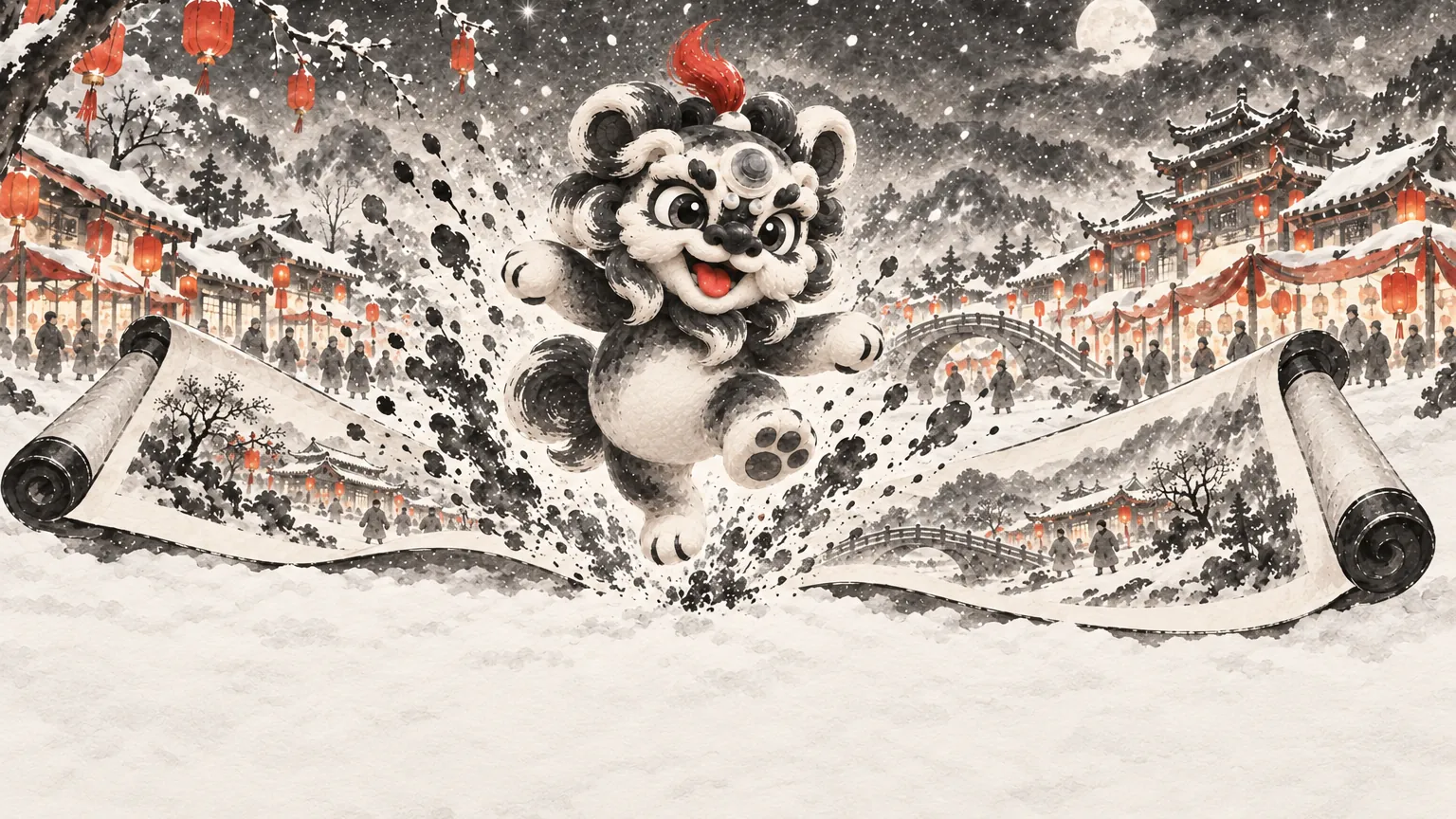
Snow fell at the end of the year, and the temple fair struck up its gongs.
A little lion is about to leap out of a painting — and take you through a Chinese New Year.
Page 2
The Missing Dot
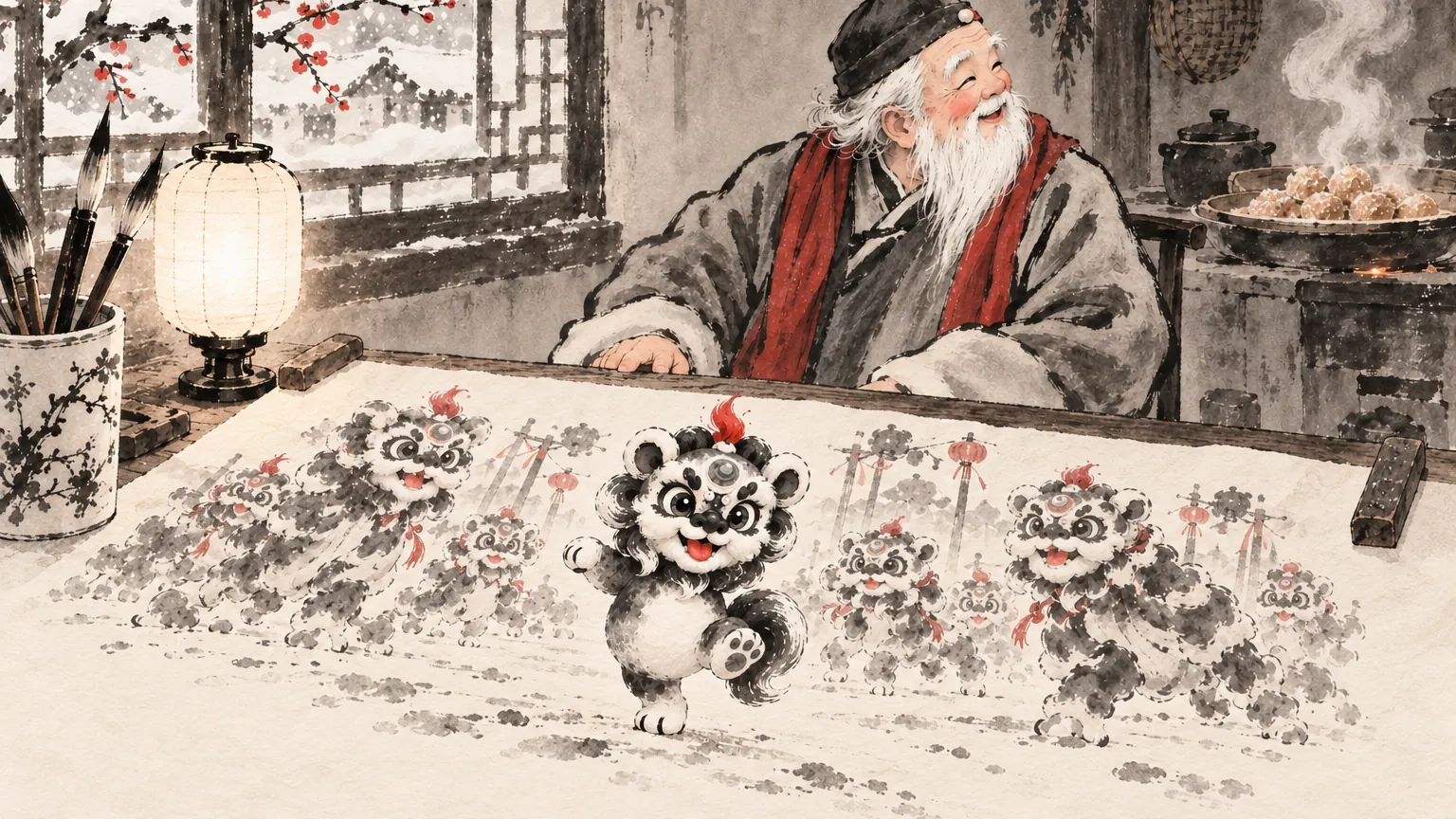
Long, long ago in Yangliuqing, an old painter was painting “The Lucky Lions.” He reached the very last little lion on the twenty-third day of the twelfth month — just as the kitchen-god candy smelled sweet on the stove. So he set down his brush and went to honour the Kitchen God first.
That one dot of cinnabar red was never painted. And so the picture kept a little lion made only of ink, without a speck of color.
Did you know?Yangliuqing New Year woodblock prints are a national intangible cultural heritage of China. Together with the prints of Taohuawu in Suzhou, Yangjiabu in Shandong and Mianzhu in Sichuan, they are known as China’s four great schools of New Year woodblock prints.
Page 3
Watching from the Painting
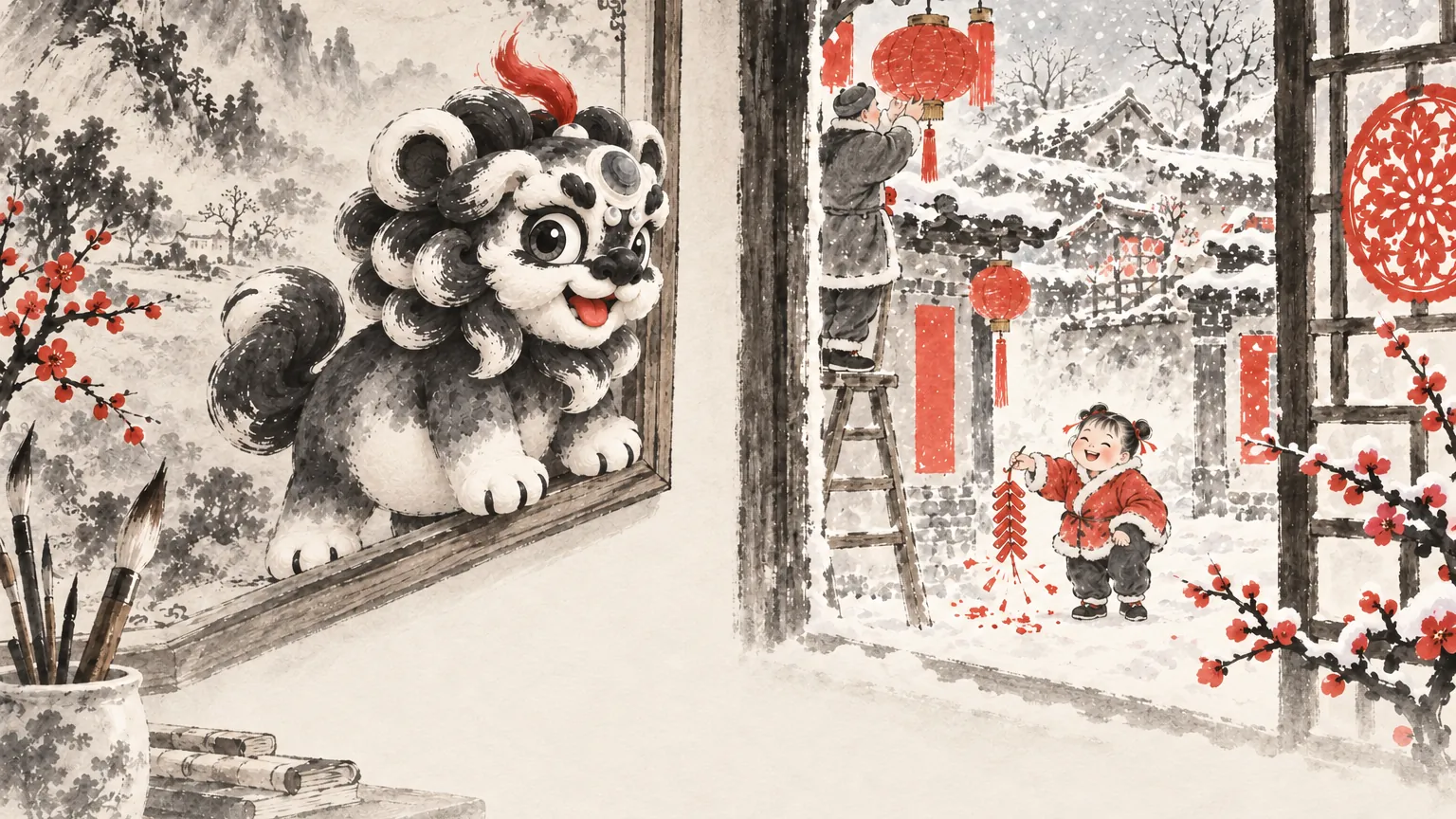
Year after year, the little lion watched people celebrate New Year from inside the painting: hanging up lanterns, pasting paper window flowers, setting off firecrackers.
RuiruiIt looks like so much fun… I wish I could go out there too.
Page 4
Plop! Out He Jumps
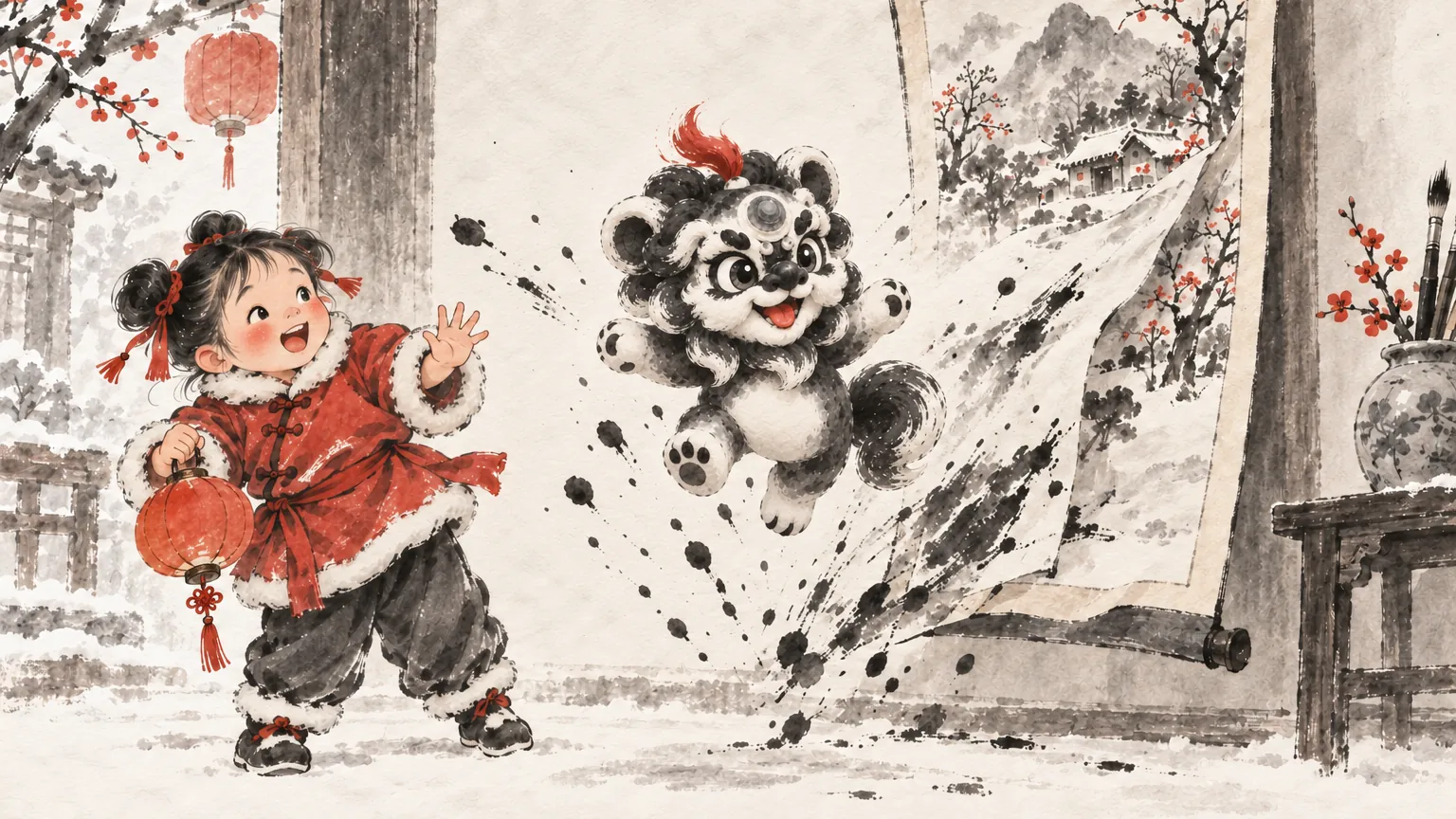
The last month of the year came round again. When the drums at the street corner went “dong-dong-qiang!”, the paper gave a shiver and — plop!
RuiruiI’m out! I’m out! My name is Ruirui!
NiuniuOh! A little lion made of ink!
Page 5
Little New Year · Sticky Candy
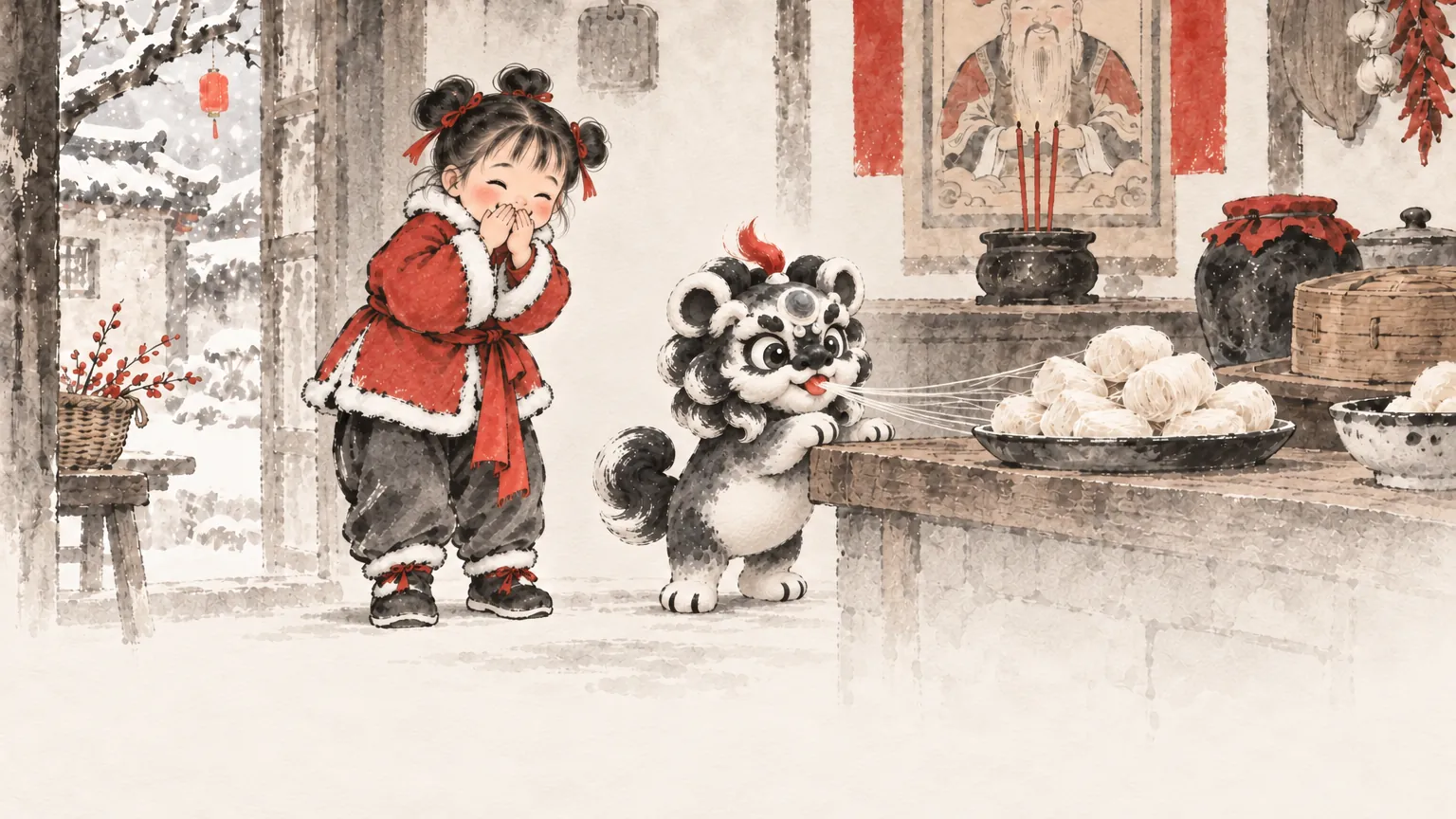
The twenty-third day of the twelfth month is Little New Year. Every family offers sticky, sweet kitchen-god candy and sends the Kitchen God off to Heaven.
NiuniuThe candy is for the Kitchen God! It sticks his mouth so he only says nice things about us up in Heaven — and keeps us safe down here.
RuiruiMmph… mmph… my mouth is stuck too!
Did you know?In the north, Little New Year usually falls on the 23rd day of the twelfth lunar month; in the south, on the 24th. Kitchen-god candy (tanggua) is made from malt sugar, and northerners also call it “Guandong candy.”
Page 6
Sweeping and Spring Couplets
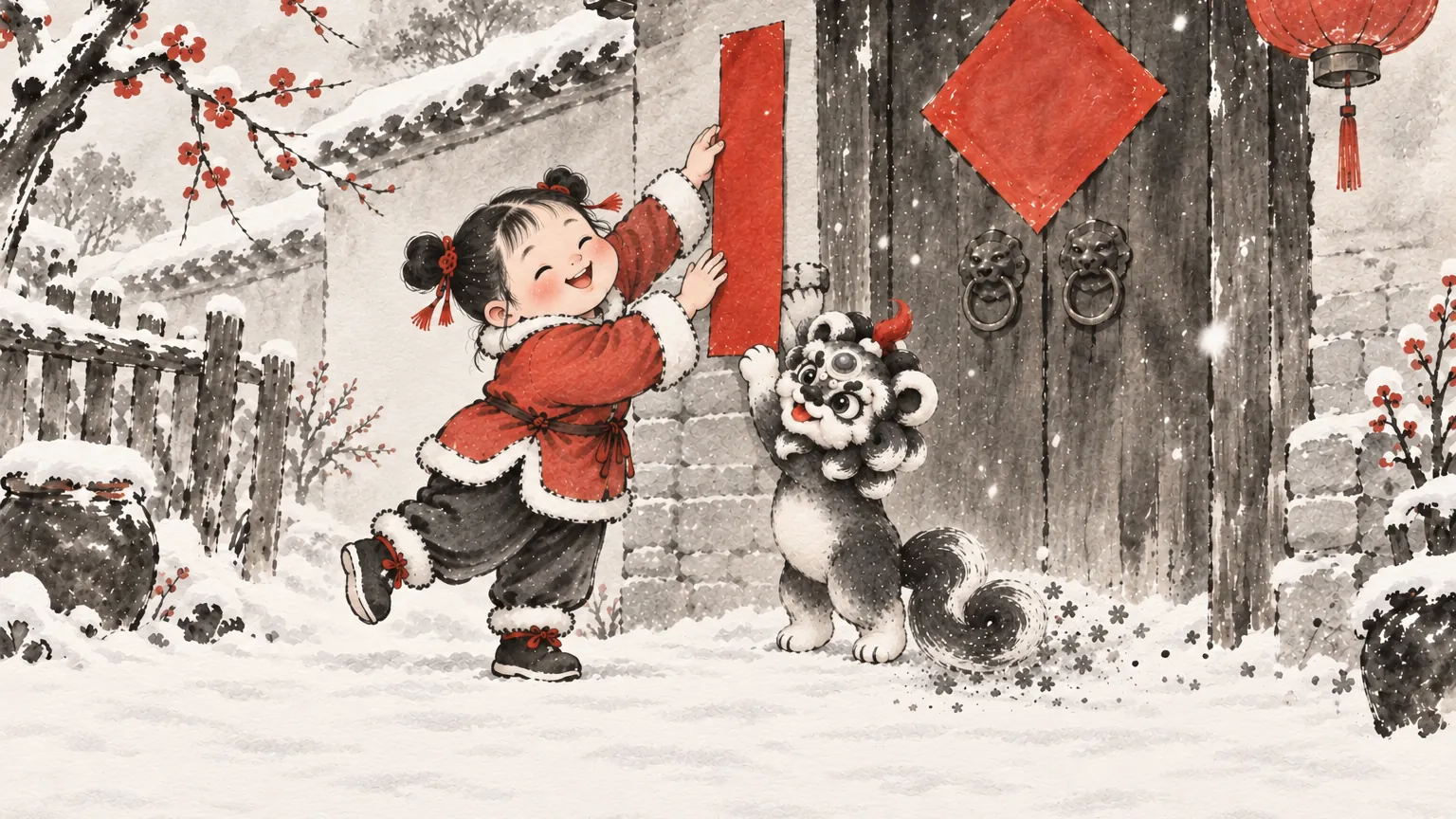
“On the twenty-fourth, sweep the house!” Ruirui’s big fluffy tail made a perfect broom.
NiuniuThey’re on the wrong sides! When you face the door, the first line goes on the right and the second line on the left.
RuiruiThe first line ends on a falling tone, the second line on a level tone… Got it!
Did you know?Sweeping the house means sweeping out the old to welcome the new — in Chinese, “dust” sounds just like “old.” Spring couplets grew out of peach-wood charms hung up to keep evil away. Lines written by Meng Chang, ruler of the Later Shu kingdom — “The new year brings abundant blessings; the fine festival is called Eternal Spring” — are often seen as one of the earliest spring couplets.
Page 7
Window Flowers and New Year Prints
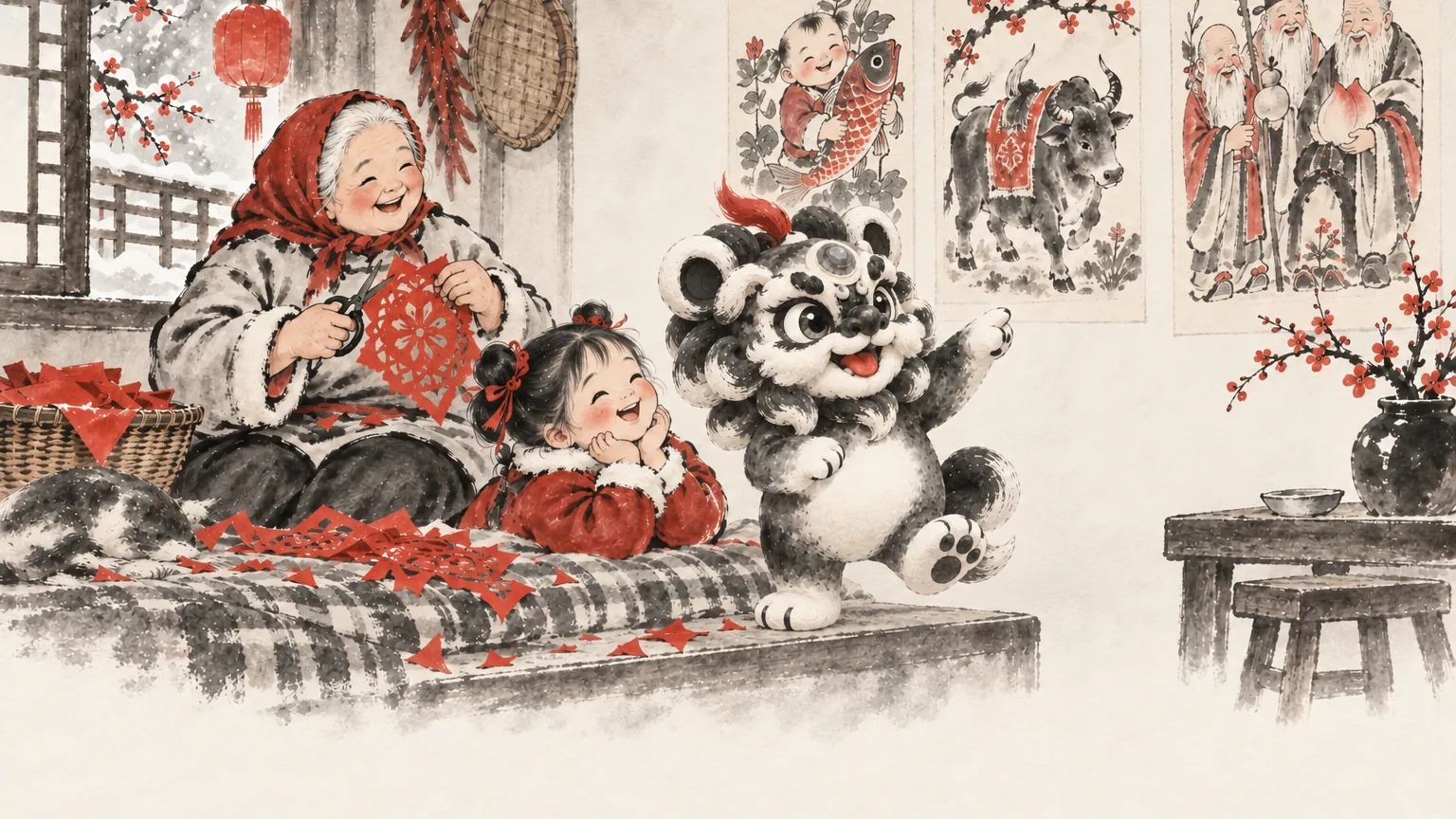
On the twenty-ninth, Grandma snipped paper window flowers, and fresh New Year prints went up on the wall.
RuiruiThe fish in the picture means “plenty every year” — because “fish” sounds just like “plenty”!
GrandmaThat’s right. The old ox carries “spring,” the God of Long Life holds “long life” — every picture hides a lucky wish.
RuiruiI came out of a picture too — but I don’t have a single speck of color.
Did you know?Chinese paper-cutting was inscribed on UNESCO’s Representative List of the Intangible Cultural Heritage of Humanity in 2009.
Page 8
New Year’s Eve · The Family Feast
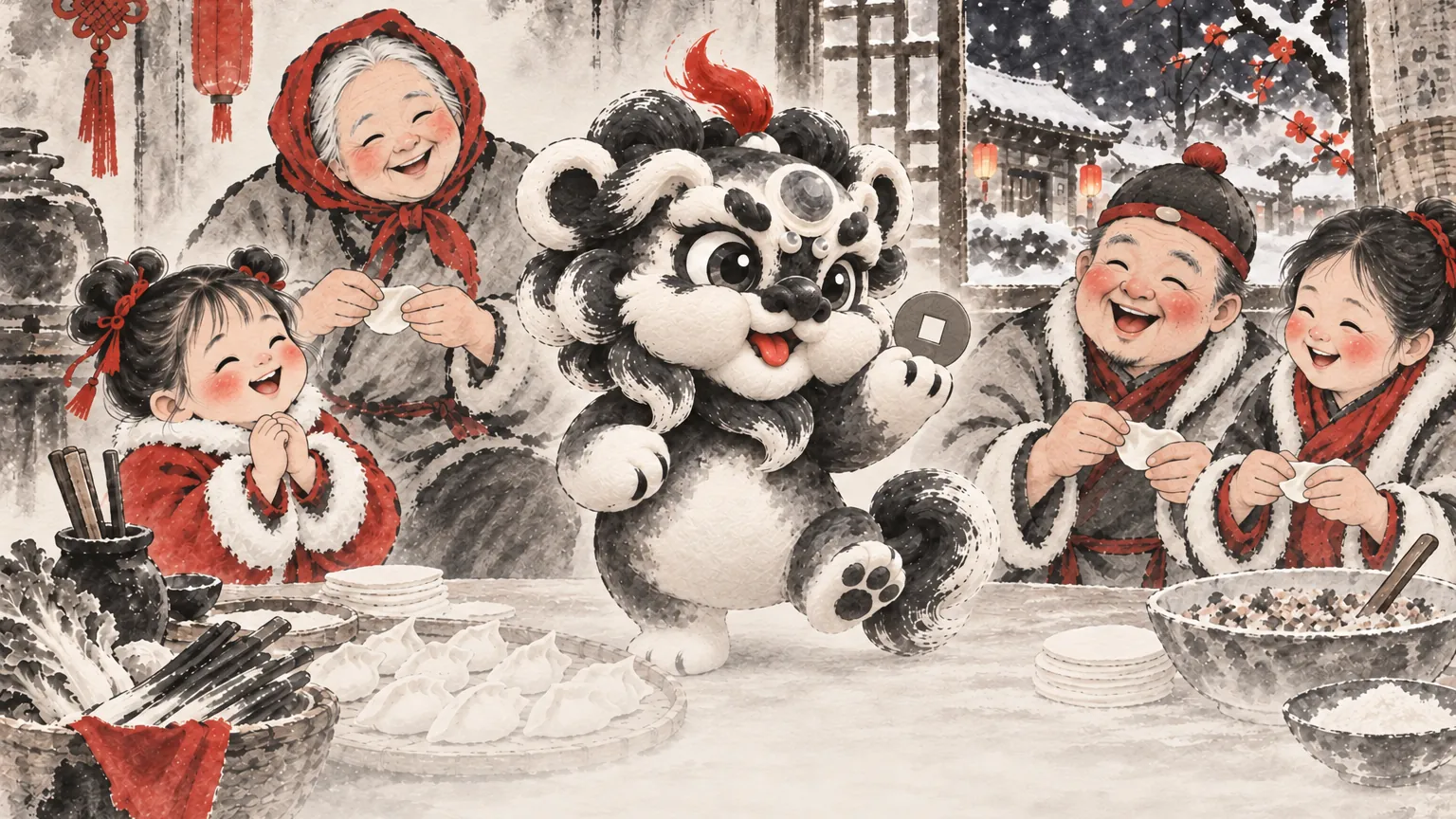
On New Year’s Eve, the whole family sat together making dumplings. Dumplings are shaped like little gold ingots, and their name sounds like “the moment the old year meets the new.”
RuiruiClink! I found the copper coin!
GrandmaWhoever finds the coin will have the best luck all year long!
They stayed up until midnight. When the firecrackers went “crackle-pop!”, timid Ruirui’s fur puffed up all over, and he dived straight into Niuniu’s arms. Right at that moment, the old year and the new year met.
Did you know?In northern China people eat dumplings on New Year’s Eve; in many southern places they eat niangao rice cake and tangyuan rice balls, wishing to grow “higher every year” and stay “together, round and whole.” The lucky money given to children is called yasuiqian, and “yasui” sounds like “keeping bad spirits down.”
Page 9
New Year’s Day · The Temple Fair
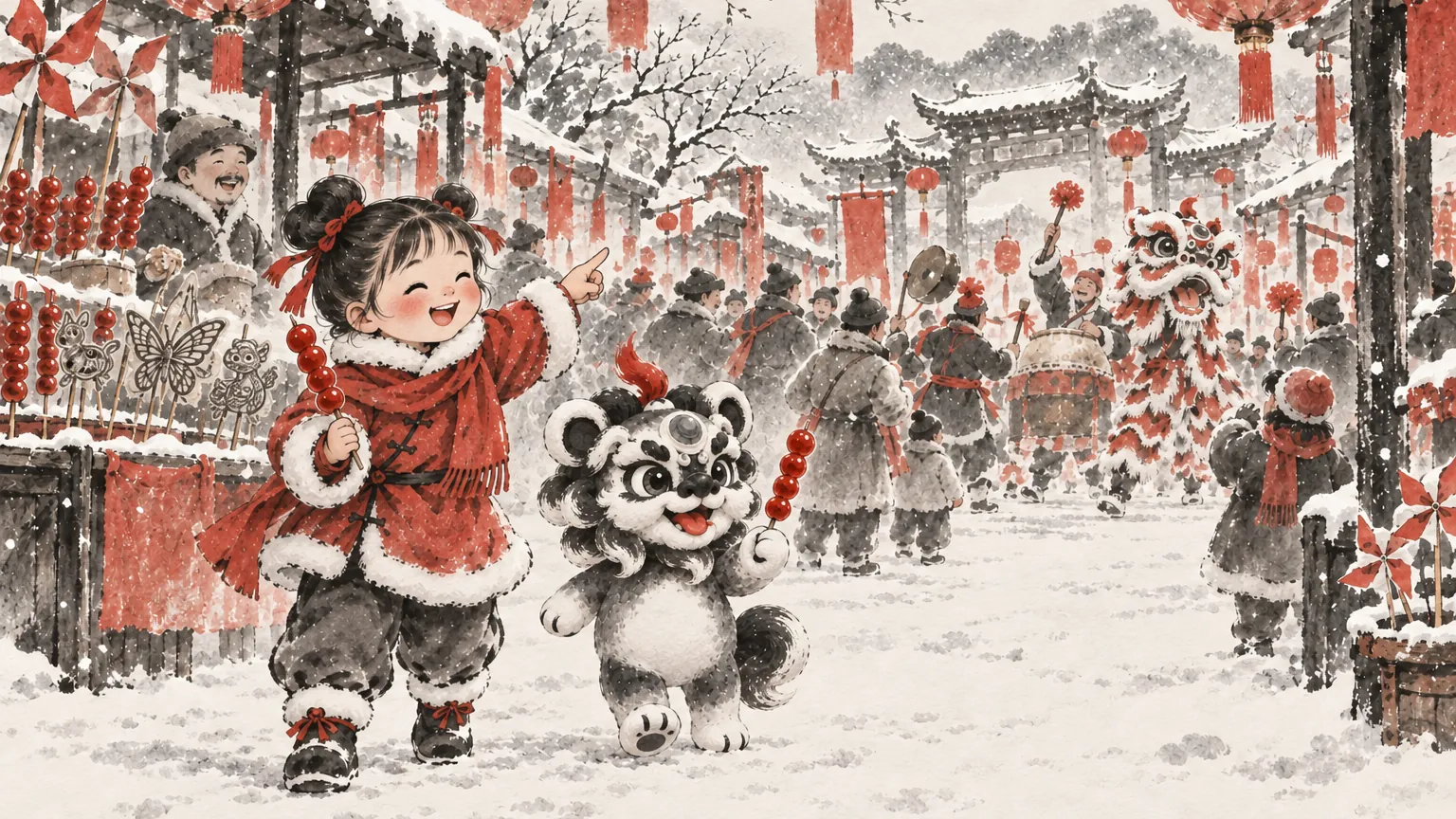
On the first day of the new year, everyone put on new clothes, wished each other a happy New Year, and set off for the temple fair.
RuiruiCandied haws! Pinwheels! Sugar paintings! … Hey — what’s going “dong-dong-qiang” over there?
Did you know?Temple fairs began as markets held during temple ceremonies. Candied haws on a stick, spinning diabolos and paper pinwheels are the “treasures” of an old-time temple fair.
Page 10
Tumbling off the Plum-Blossom Stakes
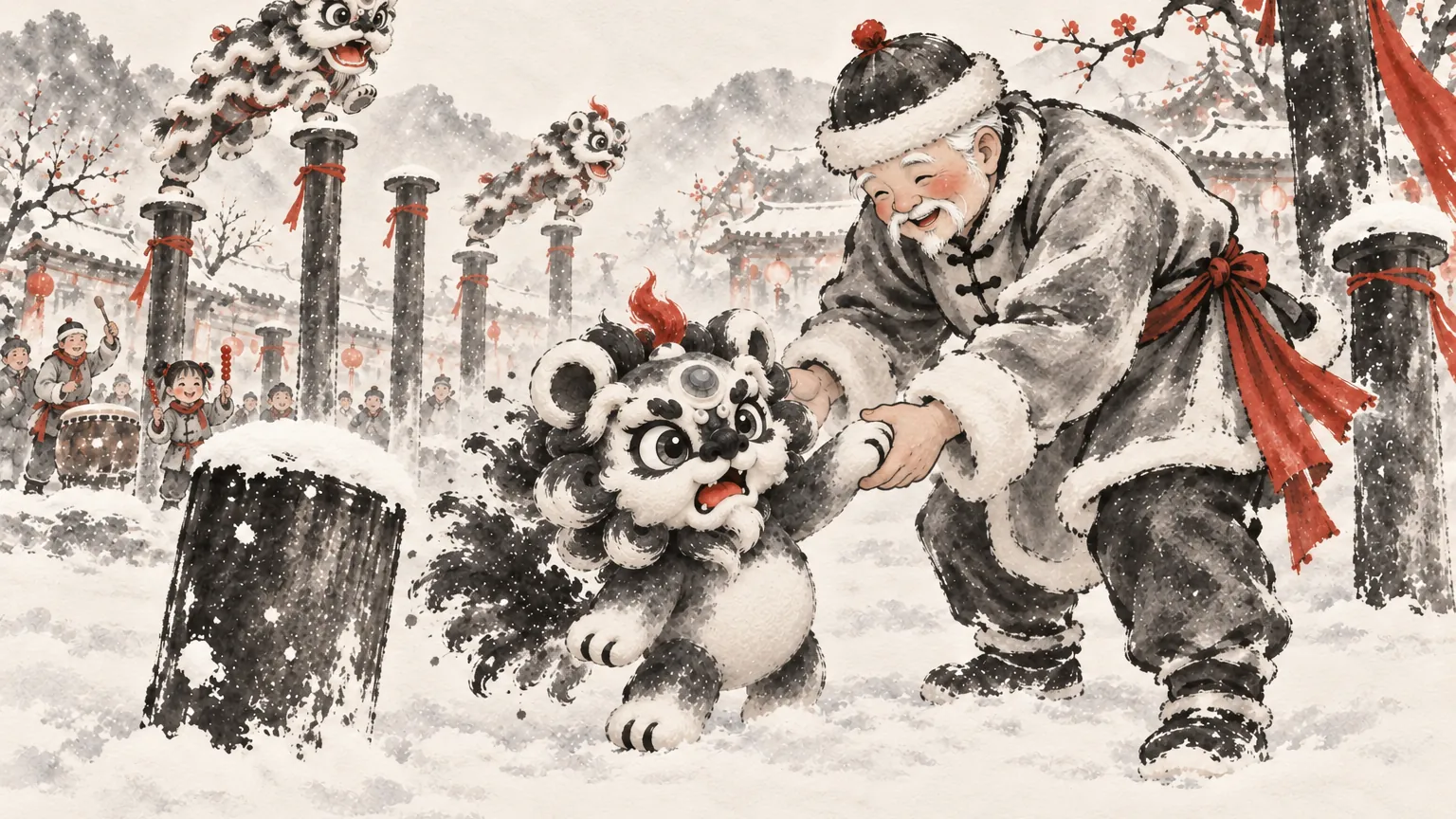
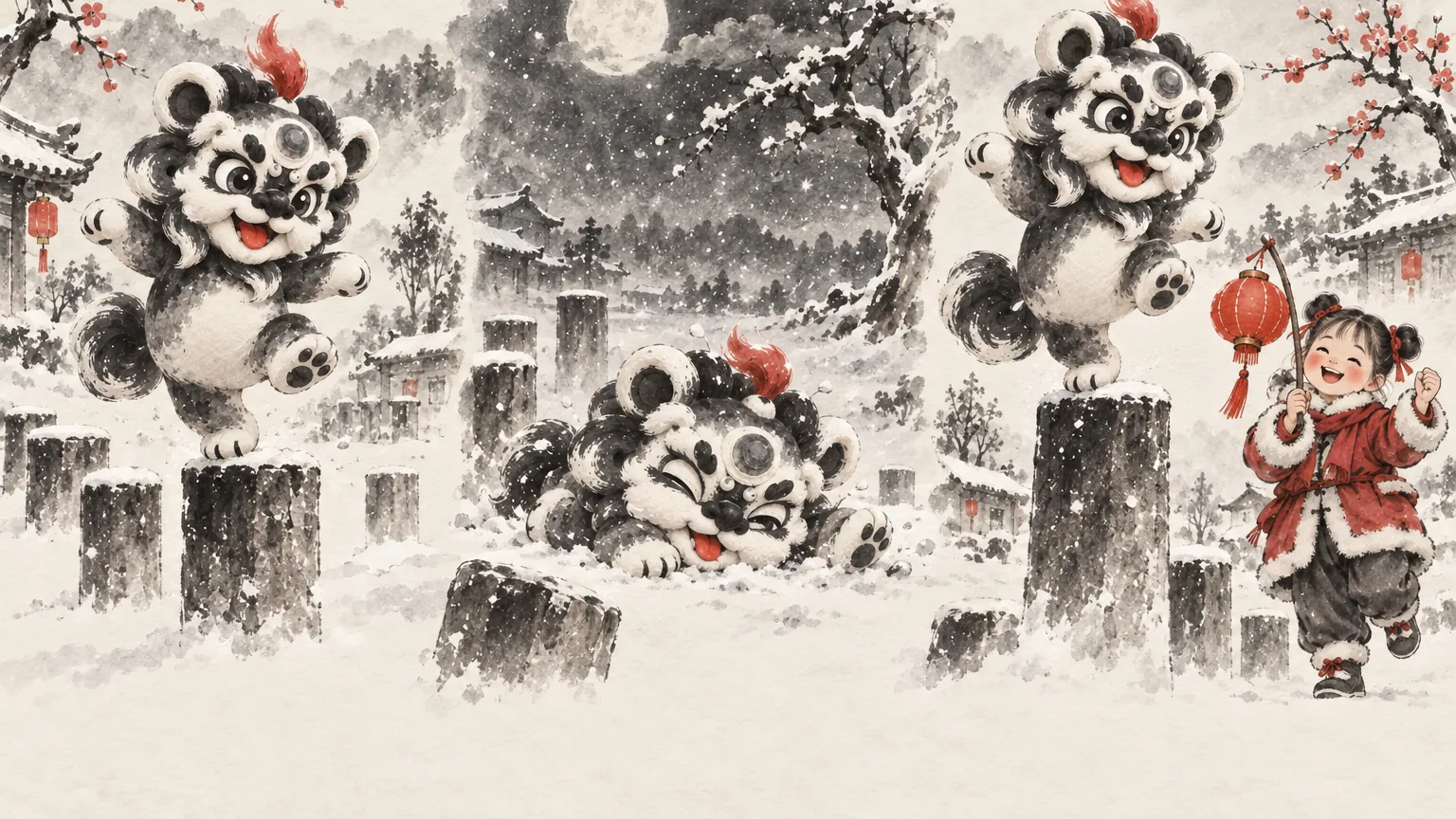
RuiruiOne stake higher! One stake higher! — Whoa!
Whenever Ruirui got nervous, his tail puffed up into a big blob of ink.
Old MasterEasy now, little lion. Before a new lion dances for the first time, we “dot its eyes.” Only with a touch of cinnabar red does a lion truly come alive.
Ruirui(touching his forehead) I… haven’t had my dot yet.
Did you know?People believe the lion dance chases away bad luck and brings good fortune. The northern lion is all about looking lifelike; the southern lion is all about spirit. Before a new lion’s very first dance, its eyes are “awakened” with a dot of cinnabar red.
Page 11
Practice, Practice, Practice
From the second day of the new year to the fourteenth, he practised and practised. Every time he fell, he climbed right back up.
RuiruiOne stake higher!
NiuniuYou can do it, Ruirui!
Page 12
Lantern Night, the Highest Stake
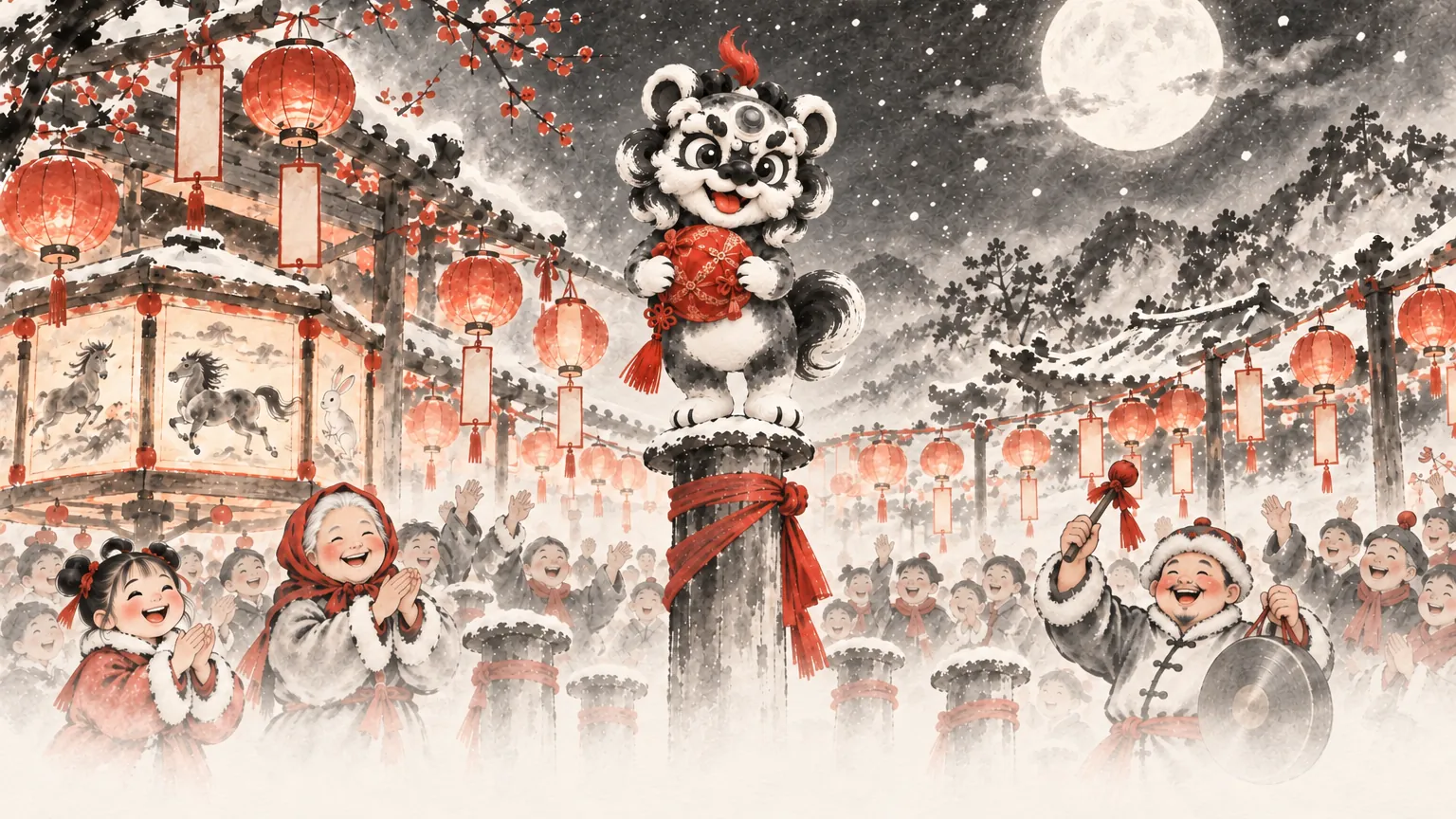
The fifteenth day of the first month brings the first full moon of the new year. Lanterns glowed all over town, and people guessed lantern riddles and ate sweet rice balls.
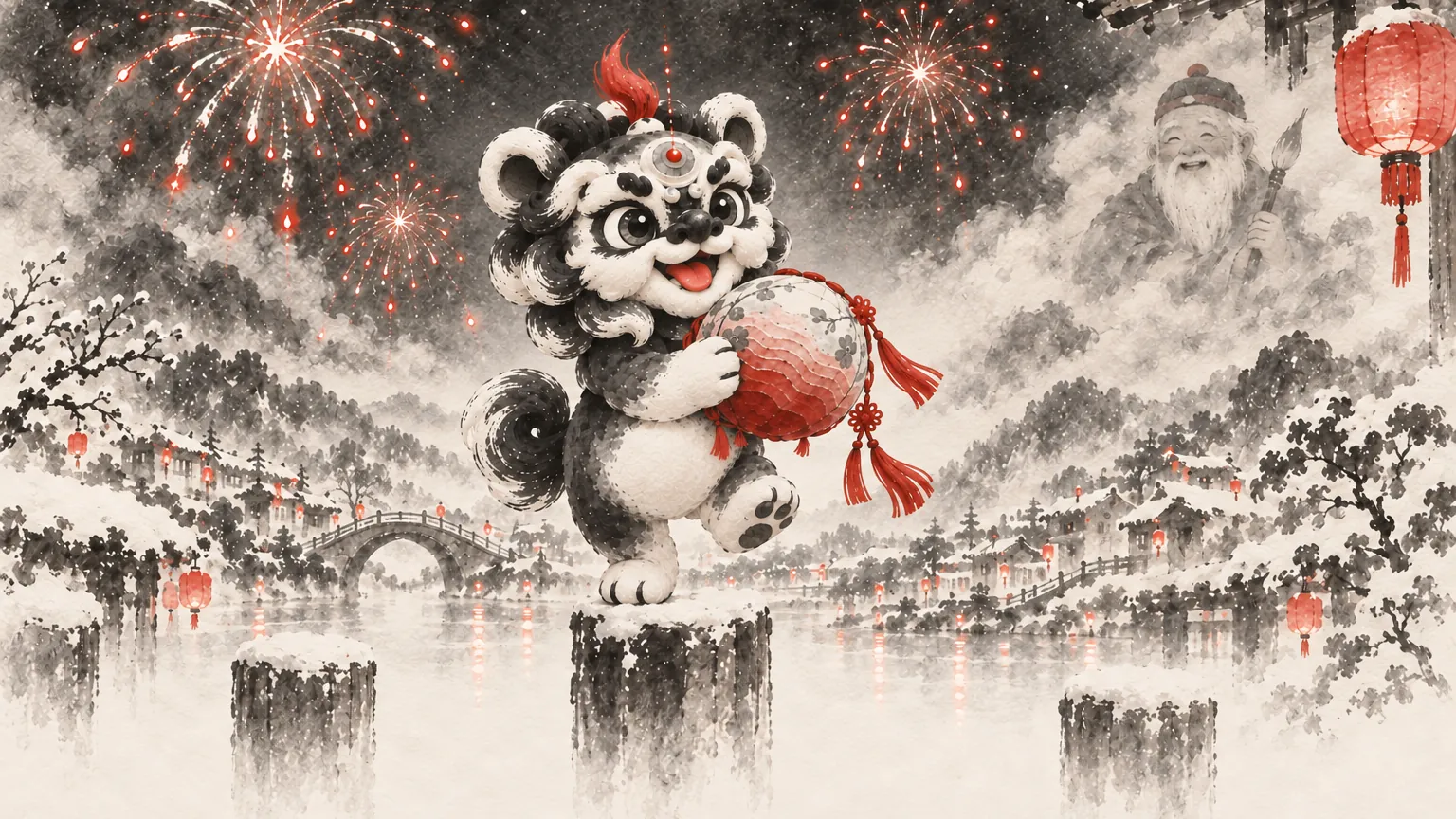
The drums began — Ruirui leapt, and landed steady on the very highest stake!
Did you know?Admiring lanterns at the Lantern Festival is said to go back to the Han dynasty. From the Song dynasty on, people wrote riddles on the lanterns — these are “lantern riddles.” In the Tang dynasty, the nighttime curfew was lifted for three nights around the festival so everyone could go out and enjoy the lights.
Page 13
One Dot of Cinnabar
Fireworks burst overhead. One tiny spark floated down and landed softly on Ruirui’s forehead — and turned into a dot of cinnabar red.
The one dot the old painter never painted was finally there.
RuiruiAm I… really alive now?
Page 14
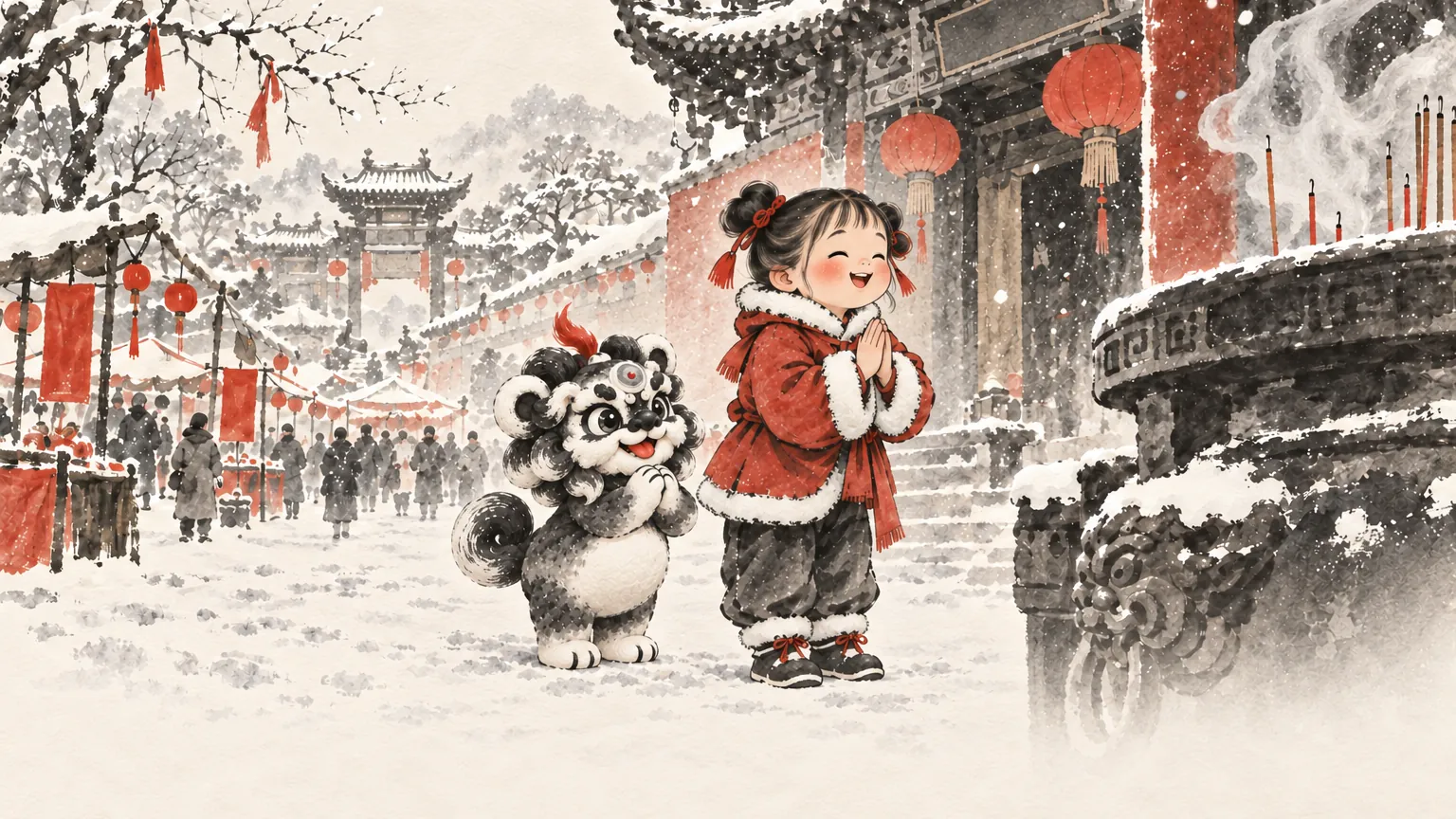
Tianhou Temple · Where the Fair Began
NiuniuWhy is it called a temple fair?
RuiruiFirst there was a temple. People came to pray, peddlers came along too, and a market grew up — a market born from a temple!
The Tianhou Temple honours Mazu, goddess of the sea. Old Tianjin folks like to say, “First came the Goddess’s temple, then came the city of Tianjin.”
Did you know?Tianjin’s Tianhou Temple was first built in the Yuan dynasty and is one of the oldest temples in the city.
Page 15
See You Next Year
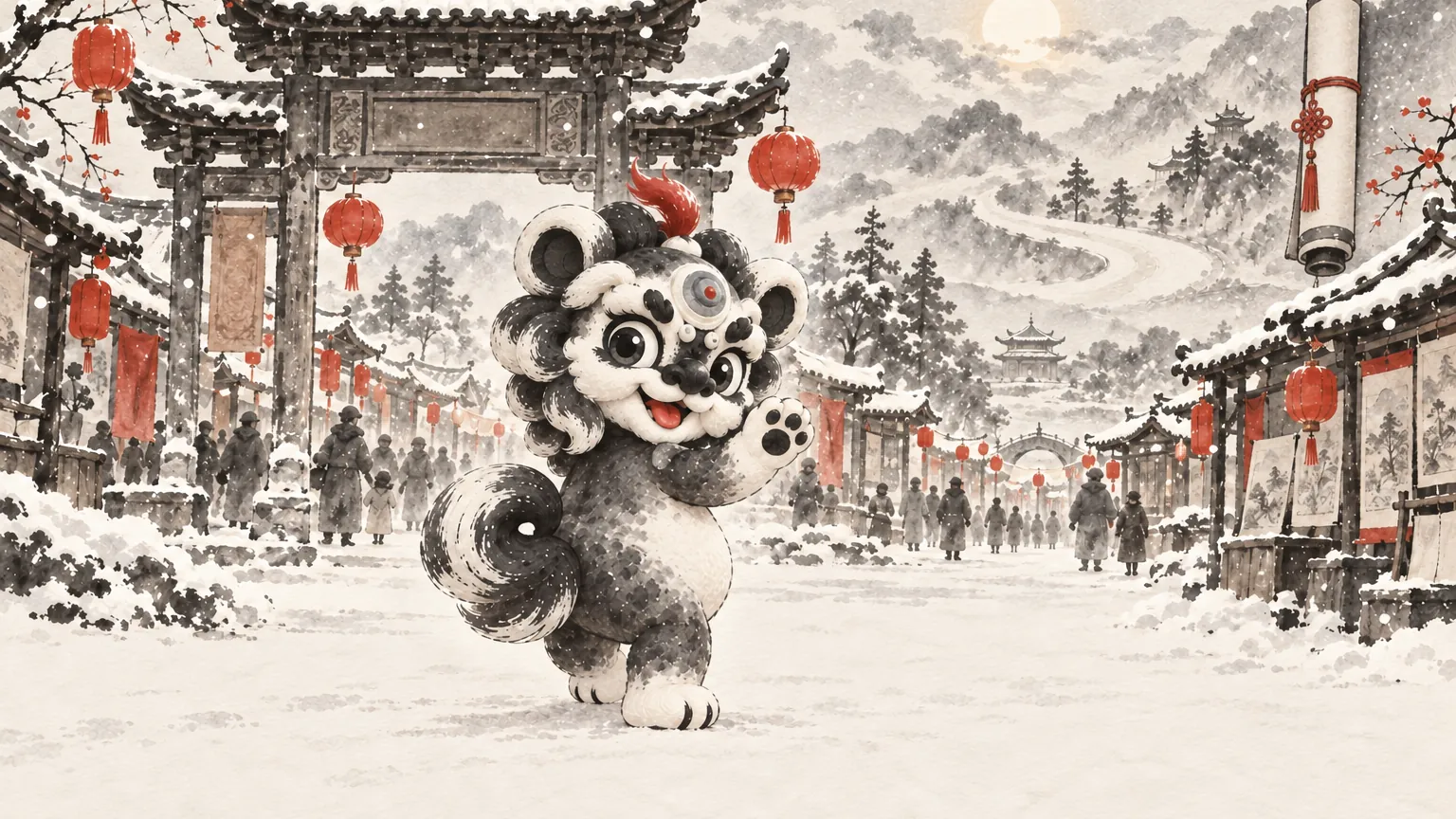
And ever since, whenever the temple fair strikes up its gongs, Ruirui leaps out of the painting.
RuiruiNew Year customs aren’t just old rules — they’re a family’s wish to be together and safe. Come on, let’s go to the temple fair together!
The story is over — Ruirui is waiting for you at the temple fair.
Enter Yuanbao’s New Year Temple Fair Back to home